
Meet The Horizon Scanning Group Members
Our Horizon Scanning Group meets quarterly to look further ahead than day-to-day research allows. Drawing on members from across the University and beyond it, the group scans systematically across industry, policy, international developments, academia, society, funding and risk.
Part of each meeting is spent deliberately inhabiting futures that don't yet exist: imagining 2040, or removing a technology we take for granted and working backwards. The point is not to predict. It is to notice, early and together, the things that would change what Manchester should be working on.
What the group looks at
Seven standing lines of sight, revisited each time the group meets.
Industry
- What is being built, bought and abandoned outside the University, and how quickly.
Policy and regulation
- What is becoming permitted, required or prohibited, nationally and locally.
International developments
- Where other countries and other systems are moving faster, or differently.
Academia
- What is emerging in the literature and in other institutions before it reaches us.
Society
- How people actually live with these technologies, including the parts that go badly.
Funding
- Where the money is forming, and what it will turn out to have been asking for.
Risk
- What could fail, who would carry the cost, and what we would wish we had thought about sooner.
What comes out of it
The group's insights become briefings for the University and the "Signatures of Emerging Digital Worlds" section of our newsletter, open for anyone to read. Where the scanning suggests Manchester should actually do something, it goes to the Steering Group, which decides what the theme does about it. What the University is doing then shapes where the group looks next.
Who is in the group
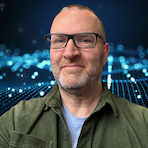
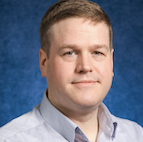
Membership is deliberately not only academic. Research is one line of sight among several, and the group is more useful for including the people who run the University's digital services and infrastructure, who hold the city's digital strategy, and who work at national scale in research computing. Between them they see what is coming from angles that a room full of researchers would miss.
-

David Topping
David Topping is a Professor of The Digital Environment. He has spent more than 20 years exploring and expanding the digital ecology that underpins environmental science.
Follow Dave on LinkedIn
-
Gail Millin-Chalabi - Head of Digital Reach and Co-Lead of the CaDiR GIS, Mapping and Earth Observation Community
Gail Millin-Chalabi is Head of Digital Reach in the AI and Ideas Adoptions Directorate at The University of Manchester Library, where she leads initiatives that expand access to digital collections, research infrastructure, and emerging technologies. Her work focuses on connecting people, collections, and data through innovative digital services, with particular interests in AI adoption, digital transformation, geospatial technologies, and digital cultural heritage. She is currently leading strategic projects that enhance the discoverability, accessibility, and long-term sustainability of the Library's digital collections, helping researchers, students, and the public engage with cultural and scholarly resources in new ways.
Follow Gail on LinkedIn
-
Jonathan Evason - Lead Platform Engineer for Campus Technology Solutions
I mainly oversee the CTS platform engineering team and helping us to create services and capabilities in cloud technologies. We're involved in several projects to varying degrees from Oracle Cloud to AWS and Azure, we also administer tooling and lead on DevOps initiatives.
We often create the foundational layer for application teams to make successful migrations to cloud so getting that right should reduce overheads and improve application services.
Follow Jonathan on LinkedIn
-
Stephen Longshaw - Director of the Computational Science Centre for Research Communities, UKRI STFC
Stephen is Director of the Computational Science Centre for Research Communities (CoSeC) and a member Scientific Computing’s Senior Leadership. He has a background in Computer Science and applied modelling and simulation.
He advocates for the value of computational research within UKRI and for the UK’s economy and Champions the role of organised research communities to enable it.
Follow Stephen on LinkedIn
-
Tony Curran - IT Operations Centre Manager, IT Services
I am the IT Operations Centre (ITOC) Manager within IT Services at The University of Manchester. ITOC provides 24x7 monitoring and operational oversight of the University's critical digital services, infrastructure and networks.
The team acts as the central point for detecting, triaging and coordinating responses to service disruptions, helping to minimise the impact of incidents on students, researchers and staff.
Follow Tony on LinkedIn



Bringing a topic to the group
Anyone whose work touches real or virtual worlds can propose a topic, and pitch it to the group in person. If you are seeing something early, from wherever you sit, the group would rather hear it from you than read about it in two years.
Get in touch. Write to david.topping@manchester.ac.uk, or join the mailing list for the bimonthly newsletter and the Signatures of Emerging Digital Worlds briefings.