
Digital Worlds
This theme explores how digital technologies, from sensor networks through to digital twins, are transforming both real and virtual worlds, as well as the lives of those who inhabit them. For example, the rapid increase in large and complex data sets from diverse sources, such as environmental monitoring, remote sensing, transport, social media, and citizen science contributions, combined with advancements in methodologies and computational techniques, offers an extraordinary opportunity to deepen our understanding of the impacts of environmental change and to develop innovative solutions to environmentally related challenges. In parallel, companies are integrating digital twins into their operations to optimise management of systems that impact on the services and resources we interact with.
As technology becomes more integrated into everyday life, it shifts from being a mere tool to becoming a collaborator in decision-making. Importantly, with the increasing sophistication the digital landscape, it is crucial that the technologies we design are grounded in human understanding, ethics and the science that underpins the world in which we live.
'The theme's job is to join that work up, identify what's coming next, and turn the sum of those parts into research, partnerships and opportunities that no single group would create alone. We do this through two complementary groups and a growing programme of activity for the wider community.'
What Manchester works on
We keep an eye on what colleagues across the University are publishing, and the areas below are drawn from that. If you recognise your own work here, you are already part of this theme and we would like to hear from you.
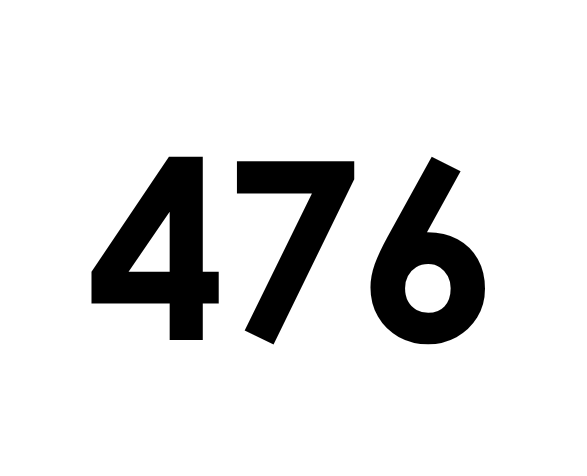
-

researchers whose published work sits in Digital Worlds
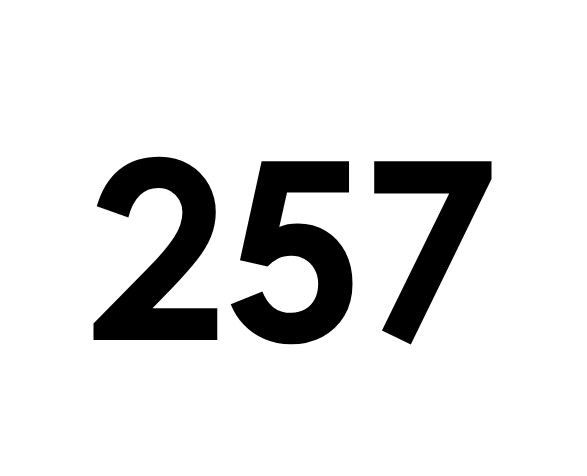
-
schools and departments
-
faculties
-
projects on the University's public research record


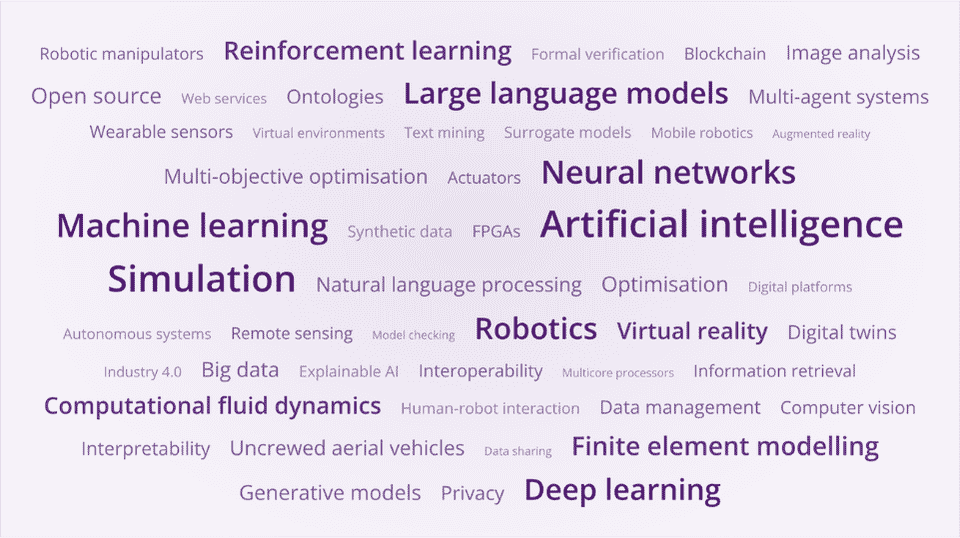
Agentic AI and autonomous systems
- Machine agents that act in the world rather than only compute: multi-agent reinforcement learning, mobile and swarm robotics, teleoperation for environments people cannot safely enter, and the control and decision-making that lets a system take its own next step.
Generative AI and foundation models
- Large language models, diffusion and generative architectures, multimodal systems, and the adaptation of general-purpose models to particular scientific and industrial problems.
Simulation, modelling and digital twins
- A deep and long-established base in computational modelling, extending into twins that stay coupled to the live systems they represent. The harder question is less whether a model runs than whether anyone is entitled to act on what it says.
Sensing, instrumentation and spatial data
- Wearable and printed sensors, structural and environmental monitoring, earth observation and remote sensing, and participatory approaches to spatial data. Every digital representation of a physical world begins with an instrument.
Uncrewed vehicles and aerial autonomy
- Aerial and ground platforms that carry instruments into places that are difficult, expensive or hazardous to reach, and the autonomy, planning and coordination that makes them useful rather than merely remote.
Immersive and extended reality
- Virtual, augmented and mixed reality, virtual environments, haptics, photogrammetry and three-dimensional reconstruction, applied in settings from construction safety and cultural heritage to music and garment design.
Digital infrastructure and platforms
- The substrate that decides what kinds of digital world are affordable to build: computer architecture, distributed and cloud systems, high-performance computing, and the platforms, interoperability and data governance that hold them together.
Sustainable and high-performance computing
- The energy, hardware and performance cost of computation at scale, from accelerator architectures and parallelism through to the question of what our simulations and models actually consume.
Verification, assurance and trustworthy systems
- Formal verification and model checking of autonomous systems, privacy-preserving computation, synthetic data, and the interpretability of machine learning. What must a system demonstrate about itself before anyone is entitled to rely on it?
Security and resilience
- Cybersecurity, adversarial machine learning, intrusion detection and the resilience of critical infrastructure, increasingly as autonomous systems begin to operate in contested environments.
Looking outward: the Horizon Scanning Group
Our Horizon Scanning Group meets quarterly to look further ahead than day-to-day research allows. Drawing on members from across the University, it scans systematically across industry, policy, international developments, academia, society, funding and risk. Part of each meeting is spent deliberately inhabiting futures that don't yet exist: imagining 2040, or removing a technology we take for granted and working backwards. The group's insights become briefings for the University and the "Signatures of Emerging Digital Worlds" section of our newsletter, open for anyone to read. Read more about the Horizon Scanning Group.
Looking inward: the Steering Group
Where the Horizon Scanning Group looks out, the Steering Group looks across the University itself. Its role is to connect and uplift what's already happening, and to decide what the theme does about what the scanning turns up. The two groups deliberately cross-pollinate: outward sight informs inward action, and what the University is doing shapes where we look next. Read more about the Steering Group.
For the community
Around the groups sits an open programme for anyone whose work touches digital and virtual worlds. Bytes & Brews, our bimonthly newsletter, turns the groups' conversations into readable narratives, researcher spotlights and curated funding calls. Community members can propose topics (and pitch them in person) to the Horizon Scanning Group, feature in our Researcher Spotlight, and join the events we're building with the community's input.
Get involved. The easiest way in is to join the mailing list, reply to the newsletter, or simply get in touch. If your work touches real or virtual worlds, there's a place for it here.